Dreaming of stepping from breakfast to your boat in minutes? If Key Biscayne is on your shortlist, you are already thinking like a local who values effortless access to Biscayne Bay, direct routes to the Atlantic, and a refined island lifestyle. The island delivers all of that, though on-island private dockage is limited and the smartest plans mix island living with nearby full-service marinas. In this guide, you will learn where to keep your yacht, how to navigate local channels and rules, what property types fit a yacht-forward life, and the practical checks that protect your investment. Let’s dive in.
Why Key Biscayne suits yacht owners
Key Biscayne sits just southeast of mainland Miami, across Biscayne Bay via the Rickenbacker Causeway. You can cruise the bay or head out to the Atlantic without locks, with common ocean routes around Cape Florida near Bill Baggs State Park or through marked bay channels. The island blends boating freedom with beaches, parks, and quick access to Miami’s marine services.
Many owners keep larger yachts at mainland marinas while enjoying a tender or smaller boat on the island. If you want immediate private mega-yacht dockage attached to your home, inventory is limited and typically commands a premium.
On-island dockage and mooring
On-island facilities tend to be municipal or park-managed with a smaller slip count than mainland marinas. You will find options near the north side by park facilities and at harbors adjacent to Bill Baggs Cape Florida State Park on the south. Availability, services, and management change, so confirm details directly with operators.
Public and park marinas
Island marinas and harbors serve both transient and some long-term needs. Expect a mix of wet slips and managed mooring options, with rules that vary by site. Dry stack storage on-island is limited, so many owners use mainland racks for smaller boats and tenders.
Slip reality and waitlists
On-island slips are limited. Condominium and HOA rules can restrict private docks or transferability, so it is common for residents to lease slips off-island for reliable access and services. Ask specifically about current availability, waitlists, and any resident rate structures.
What to confirm before you commit
- Maximum permitted LOA, beam, and draft
- Shore power type and amperage, potable water, and pump-out
- Fueling options and security measures
- Liveaboard policies and transient rules
- Slip lease terms and transferability tied to property sales
- Maintenance access and hurricane contracts or haul-out options
Nearby full-service marinas
If you want predictable slip availability, full maintenance, and quick provisioning, nearby mainland marinas are a strong complement to living on Key Biscayne.
Coconut Grove advantage
Coconut Grove, including the Dinner Key Marina area, offers extensive slips, fuel, provisioning, and service yards just across Biscayne Bay. Many Key Biscayne residents choose this option for larger vessels.
Downtown and PortMiami vicinity
Marinas near Downtown and PortMiami provide immediate ocean access and substantial service capacity. Expect busier waters and a longer drive by car, but convenient bluewater departures.
Miami Beach and northern bay options
Marinas to the north offer fueling, slips, and marine services with close access to dining and nightlife. If social and provisioning convenience is a priority, this corridor works well.
Heavy maintenance and refit
For major projects, Fort Lauderdale and Haulover or Sunny Isles areas offer larger yards and shipyards. These are reachable by water transit and are commonly used for haul-outs and refits.
Navigation and bridge clearances
Biscayne Bay is well charted with marked channels and shoals. Depths vary with tides and local shoaling, so draft-sensitive vessels should plan carefully. There are no locks between the bay and the Atlantic in this area, which simplifies your routes.
Verifying depth and clearance
- Consult current NOAA nautical charts for Biscayne Bay and Key Biscayne.
- Check the U.S. Coast Guard Local Notice to Mariners for bridge work or navigation changes.
- Speak with marina managers and Village or County marine offices for the latest dredging and maintenance updates.
- Use up-to-date chartplotters or apps that incorporate NOAA ENC data and tidal predictions.
Air draft and sailboat planning
The Rickenbacker Causeway bridges serve as the road link to the island. If your route or prospective dock requires passing under fixed bridges, verify the specific published vertical clearance on authoritative charts and notices. Sailboats and tall flybridges should confirm air draft against these values before making a purchase decision.
Environmental rules and anchoring
Biscayne Bay includes protected habitats, seagrass beds, and aquatic preserves. Anchoring and mooring restrictions vary by jurisdiction to protect these environments. Review guidance from the Florida Department of Environmental Protection for the Biscayne Bay Aquatic Preserve, the Florida Fish and Wildlife Conservation Commission, and applicable Miami-Dade County or Village ordinances. Many sensitive areas require designated moorings, and fines are possible for illegal anchoring.
Hurricane season strategy
Hurricane season runs June through November. Your marina plan should include contracts for storm preparation, haul-out or secure tie-ups, and a clear protocol for minimum drag anchorages if applicable. Insurance carriers may require specific storm procedures, documentation, or approved yard facilities. Ask early about hurricane-rated docks and whether your preferred marina or yard can guarantee haul-out when storms approach.
Property types that fit yacht lifestyles
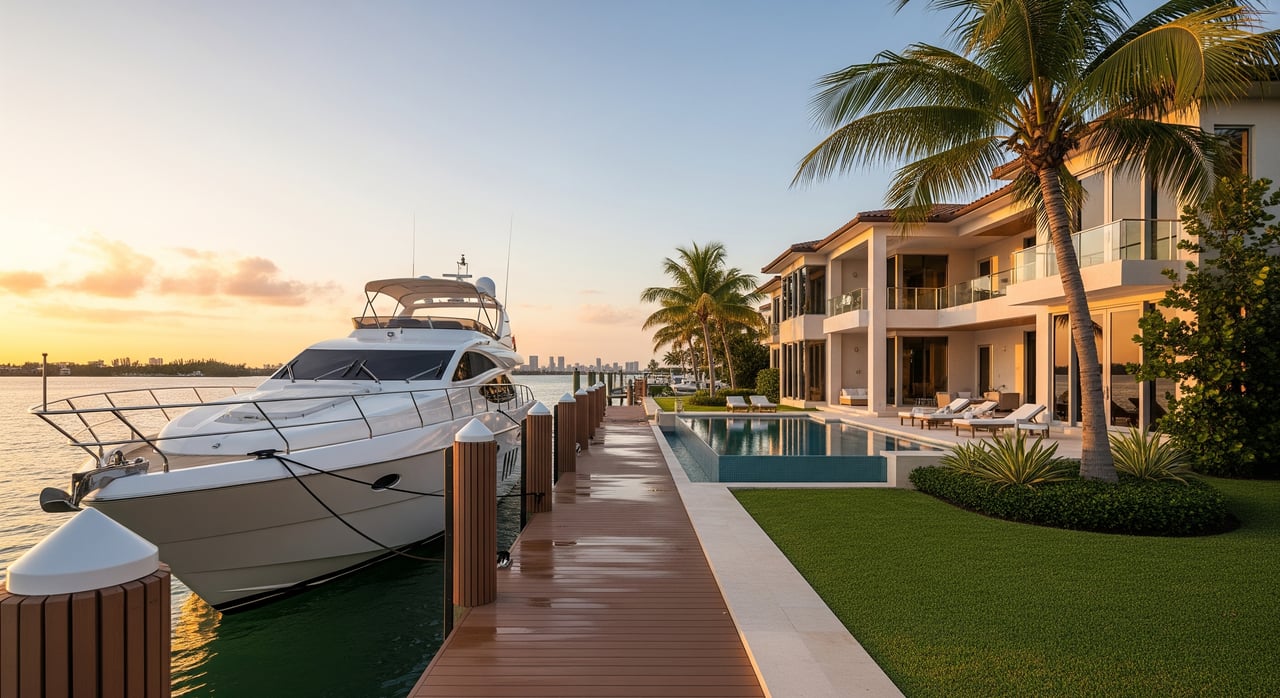
Waterfront single-family homes offer the best chance for private docks, subject to permits and seawall conditions. These properties are limited and typically carry a premium. Bayfront low-rise or mid-rise condominiums along western shorelines may include private marina facilities or limited slip access, though many rely on nearby municipal marinas. Policies differ by building, so review governing documents.
Properties near public marinas and park harbors, especially around Crandon Park to the north and Bill Baggs to the south, shorten transit times. If an immediate on-site private yacht berth is non-negotiable, also consider nearby mainland neighborhoods like Coconut Grove that feature full-service marinas and more abundant private docks.
Budget and ongoing costs
Owning a yacht-ready lifestyle involves predictable and periodic expenses. Build a comprehensive budget that includes:
- Slip fees for seasonal, annual, or monthly terms, plus transient rates for guest usage
- HOA fees and any assessments tied to marina facilities
- Insurance costs, including hull, liability, and hurricane deductibles
- Routine maintenance such as engines, bottom paint, canvas, and electronics
- Haul-out and yard charges for periodic service or storm events
- Fuel and provisioning, which can vary by marina and location
Buyer checklist for Key Biscayne yacht living
Use these questions to focus your search and due diligence:
- What is your exact vessel profile, including LOA, beam, draft, and air draft, and does it fit the permitted slips or dock dimensions you are considering?
- Do you require a private dock at your residence, or will a leased slip at a nearby marina meet your needs?
- Are slips or moorings available now, and what are the waitlists and transfer rules with a property sale?
- What are the marina’s policies on liveaboards, transient stays, guest dockage, and visitor reservations?
- Which services are onsite versus nearby, including fuel, pump-out, shore power, security, and maintenance?
- What is the hurricane plan, including haul-out availability, storm contracts, and anchorage options?
- Where are the nearest designated mooring fields, and what are the current anchoring restrictions?
- What insurance requirements apply, and which local surveyors or inspectors are best suited for pre-purchase evaluations?
- What do Village and County offices say about dock permits, seawall conditions, dredging, or siltation plans that may affect access?
Living logistics that make boating easier
Provisioning should be simple, with quick access to groceries and marina fuel or pump-out services. Proximity to marine trades such as mechanics, canvas, electronics, and yard facilities is essential if you run a larger yacht or a busy cruising calendar. Socially, plan for marina restaurants, yacht clubs, and charter or fishing operators that align with your interests. If you use a trailer or dry storage for tenders, confirm parking and street access.
How to move forward confidently
Start with route planning on current NOAA charts and create a draft hurricane and insurance plan. Speak directly with marina managers to confirm slip specs, policies, and waitlists, then collect condo or HOA rules that govern docks and liveaboard use. Call the Village and Miami-Dade County to ask about docks, seawalls, dredging, and any infrastructure projects. Schedule site visits at both high and low tide to assess real-world clearance and operations. Finally, weigh the lifestyle of island living against the practicality of a mainland slip for larger yachts.
If you want a tailored plan that fits your vessel, lifestyle, and investment goals, connect with Monica Hurtado for a private, concierge-level consultation.
FAQs
What makes Key Biscayne yacht-friendly for daily cruising?
- You have quick access to Biscayne Bay, charted channels, and ocean routes around Cape Florida without locks, plus close proximity to Miami marine services.
Where do most residents keep larger yachts if on-island slips are limited?
- Many lease slips at nearby full-service marinas such as Coconut Grove, Downtown or PortMiami vicinity, or Miami Beach, while keeping tenders on the island.
How do I confirm bridge clearances for my route or dock?
- Verify vertical clearance on current NOAA charts, review the U.S. Coast Guard Local Notice to Mariners, and confirm with marina managers and local marine offices.
Are private docks common with Key Biscayne homes?
- Private deep-water docks are limited and often command a premium. Many buyers rely on off-island marina slips paired with an island residence.
What anchoring rules should I know in Biscayne Bay?
- Expect restrictions near protected habitats and seagrass beds. Check guidance from the Florida Department of Environmental Protection, FWC, and local ordinances.
What is a smart hurricane plan for my boat in Miami-Dade?
- Secure a marina hurricane contract, confirm haul-out or tie-up options, align with insurance requirements, and prepare storm protocols well before the season.