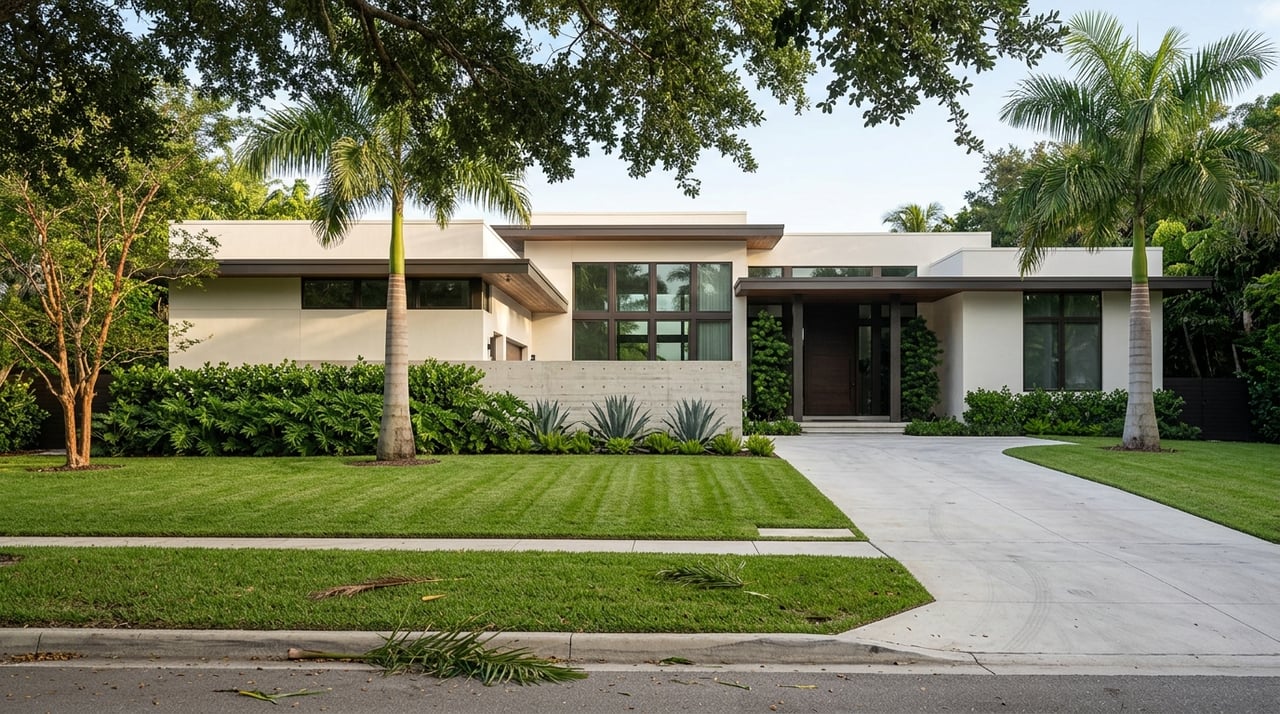
Wondering whether Pinecrest is the right backdrop for your next estate purchase? If you are weighing privacy, land, and a more residential pace against walkability and urban energy, Pinecrest deserves a closer look. This guide will help you understand how the village feels, what shapes its estate character, and who it tends to suit best. Let’s dive in.
Why Pinecrest Stands Out
Pinecrest is one of Miami-Dade County’s most residential municipalities. The village spans about eight square miles, with an estimated 2025 population of 18,635 and a population density of 2,467.9 people per square mile. That lower-density setting helps explain why Pinecrest often feels more spacious and private than many other Miami-Dade addresses.
The village also relies largely on residential property taxes because it has very little commercial or industrial tax base. In simple terms, Pinecrest is built around homes first. That matters if you are searching for an estate setting where the surrounding environment supports quiet streets, larger lots, and a more settled daily rhythm.
Pinecrest’s Estate Character
Pinecrest’s identity is rooted in its history. The village says the area grew in the 1950s and 1960s around ranch-style homes on acre lots, which helped create its lush, low-density residential character. That early pattern still influences how the community looks and feels today.
The zoning framework continues to support that estate atmosphere. Pinecrest includes estate districts such as EU-1C at one unit per 2.5 gross acres and EU-1 at one unit per gross acre, along with other estate-style categories like EU-S and EU-M. For you as a buyer, those land-use rules help preserve the breathing room that often defines estate living.
The village’s planning framework goes even further by emphasizing open space, compatibility with natural features, landscaping, buffering, lot coverage, and building height. Those details may sound technical, but they directly shape your day-to-day experience. They help Pinecrest remain a place where land, privacy, and greenery are part of the setting, not an afterthought.
What Daily Life Feels Like
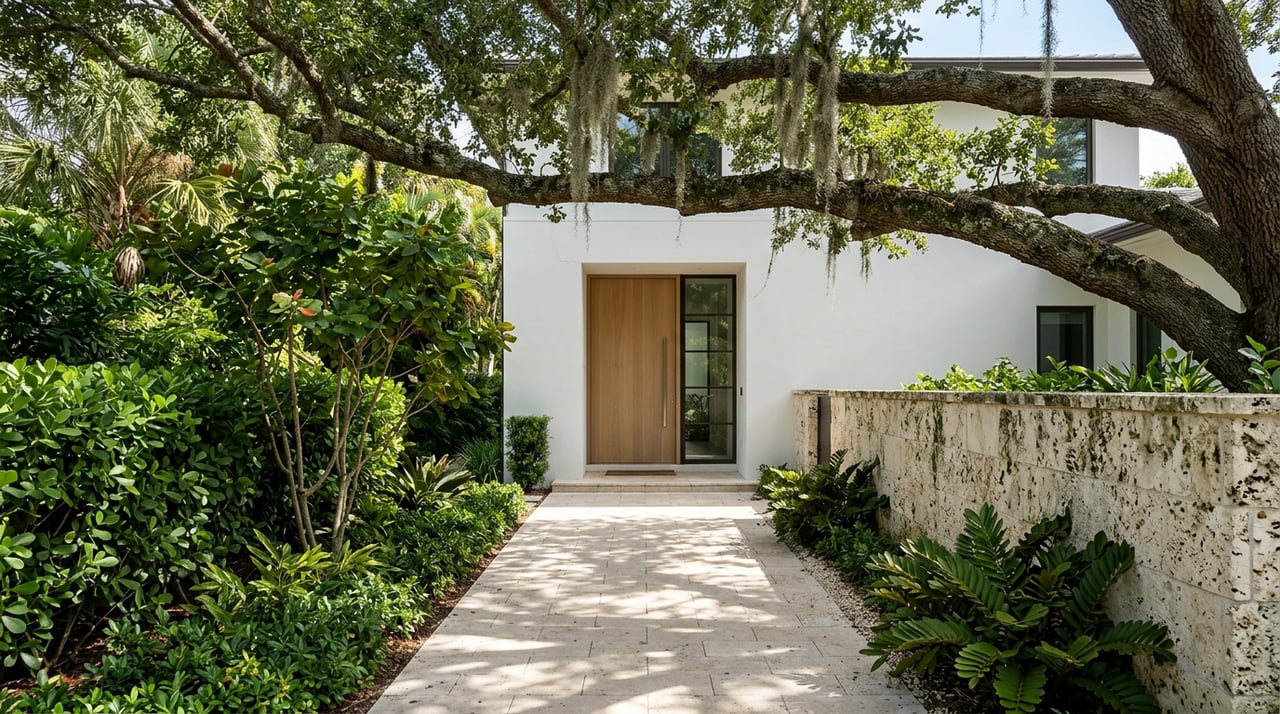
One of Pinecrest’s strongest qualities is its tree canopy. The village is recognized as Tree City USA and says it has planted more than 10,000 street trees since 1997. Its current public information also highlights 50,837 street trees, reinforcing just how central landscaping and greenery are to the local identity.
The Tree Placement Program focuses on native street trees in the public right-of-way, with goals that include expanding green space, reducing heat, and improving aesthetics. For you, that often translates into shaded streets, a softer visual environment, and a more established residential feel. In South Florida, that can make a noticeable difference in how a neighborhood lives from season to season.
Pinecrest’s park system adds to that impression. The village says it has eight parks, and Coral Pine Park includes a 2.9-acre pineland preserve and mature tree canopy. Pinecrest Gardens, located at the former Parrot Jungle site, also serves as a major public horticultural anchor for the community.
Privacy With Services Nearby
Pinecrest offers an interesting balance between privacy and convenience. Inside the neighborhood core, the environment is largely residential, with mostly single-family homes and limited commercial activity. That contributes to a quieter, more private everyday setting than you may find in more mixed-use parts of Miami.
At the same time, the village says more than 750 businesses line its western boundary along Pinecrest Parkway and US-1. That means many daily services and errands are concentrated at the edges rather than threaded through the interior streets. If you value calm at home but still want practical access to shopping and services nearby, that layout can be appealing.
What Architecture to Expect
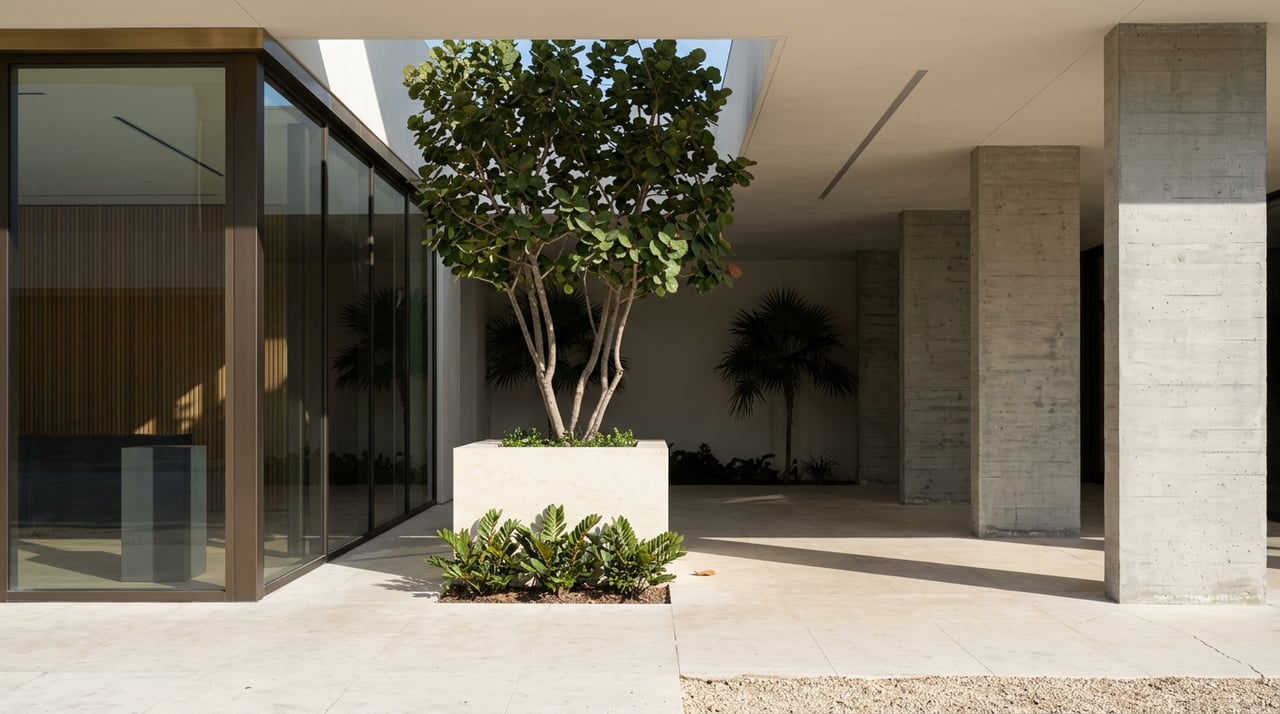
Pinecrest does not present one tightly controlled architectural style. Instead, its history and zoning suggest a broader mix that can include older ranch homes, renovated properties, and custom newer construction. If you are looking for a highly specific design language across an entire community, Pinecrest may feel more varied than some neighboring markets.
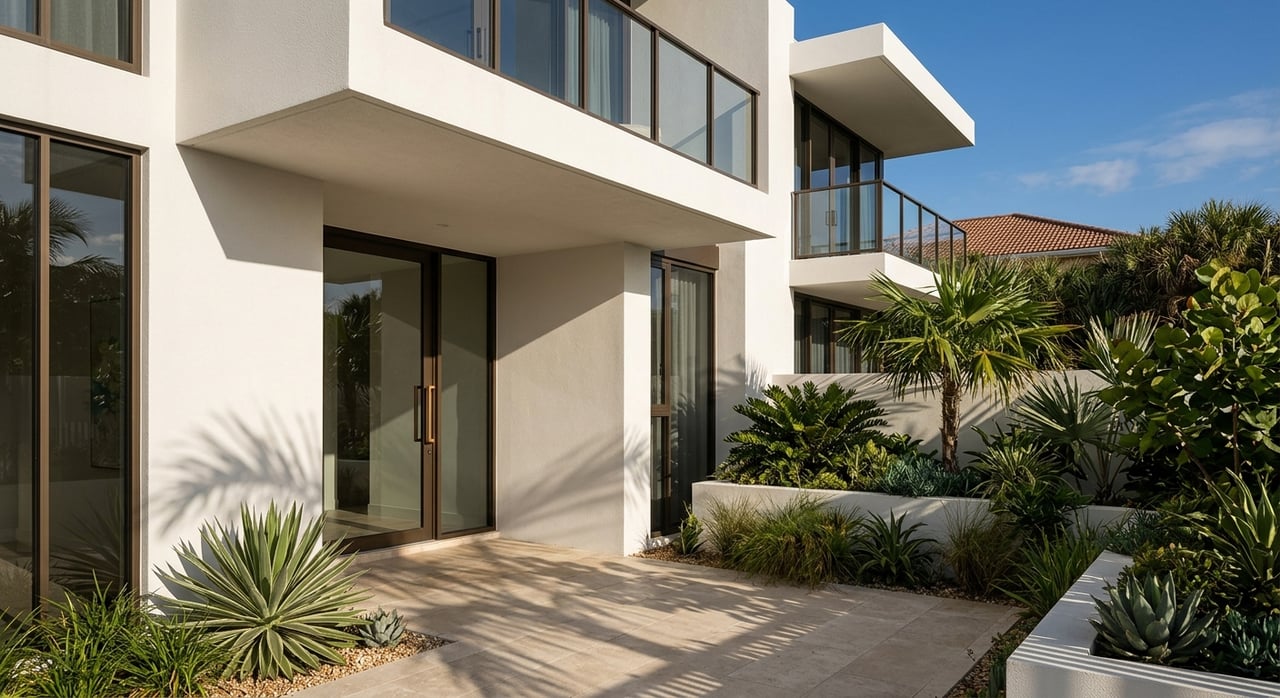
That variety can be a strength. It gives you room to explore different estate expressions, from classic large-lot homes to more contemporary residences shaped around outdoor living. In a market where land is a key part of value, architectural diversity often comes with more flexibility in how properties evolve over time.
Pinecrest vs Coral Gables and Coconut Grove
If you are deciding among Miami-Dade’s premier residential enclaves, context matters. Pinecrest, Coral Gables, and Coconut Grove each offer a distinct experience. The right fit depends on whether you prioritize privacy, design identity, or mixed-use energy.
Pinecrest vs Coral Gables
Coral Gables is known for a more design-managed identity. The city highlights its City Beautiful and Garden City roots, and its zoning framework encourages Mediterranean architecture through a bonus program overseen by its Board of Architects. It also promotes destinations like Miracle Mile, which reflects a stronger urban and civic energy.
Pinecrest feels different. It is more estate-oriented, more heterogeneous in architectural expression, and generally more focused on lot size, landscaping, and residential calm. If your goal is a property where space and privacy lead the conversation, Pinecrest often has the clearer advantage.
Pinecrest vs Coconut Grove
Coconut Grove offers another contrast. Miami’s planning department notes Neighborhood Conservation Districts in much of the Grove, along with ongoing local concerns tied to lot coverage, tree preservation, density, and property rights. The area also has a stronger commercial-village component through its business improvement district.
Compared with Pinecrest, Coconut Grove tends to feel more eclectic and more mixed-use. Pinecrest is typically the better fit if you want a quieter estate setting with a stronger emphasis on low-density residential living. Coconut Grove may appeal more if you want historic texture and a livelier village atmosphere.
Who Pinecrest Fits Best
Pinecrest tends to work best when your priorities center on space and privacy. If you want a larger yard, outdoor entertaining potential, and a slower residential rhythm, the village aligns naturally with those goals. Its planning framework and land-use patterns support that lifestyle in a tangible way.
It can also appeal to buyers who want a community that the village says includes five public schools and many private schools. The practical point is not to rank those options, but to note that educational variety is part of the local landscape. For many buyers, that is one more factor that supports long-term livability.
Pinecrest may be less ideal if you want a highly walkable shopping and dining environment, a very specific architectural language, or the shortest possible commute. In those cases, Coral Gables or Coconut Grove may align more closely with your priorities. Pinecrest is strongest when the brief is estate-first.
The Main Trade-Offs to Consider
Every market asks you to balance something. In Pinecrest, the main trade-off is often convenience versus space. You gain land, lower density, and a more private residential setting, but you may give up some walkability and urban immediacy.
Commute patterns help illustrate that point. Census data show a mean travel time to work of 27.6 minutes in Pinecrest, compared with 23.8 minutes in Coral Gables. That difference will matter more to some buyers than others, especially if daily access to downtown or major employment centers is a top concern.
Pinecrest’s lower density is also part of the equation. It feels less urban and more car-oriented than many Miami addresses, which is often exactly why buyers choose it. If you see your home as a private retreat with room to breathe, that trade-off may feel worthwhile.
What the Numbers Suggest
Pinecrest’s income profile places it in Miami-Dade’s upper tier. The village’s median household income is listed at $206,417, compared with $134,216 in Coral Gables and $62,462 in the City of Miami. That does not make one market inherently better than another, but it does support Pinecrest’s position as an affluent, low-density estate market.
For you as a buyer, those numbers are most useful as context. They reinforce what the land-use pattern, tree canopy, and residential structure already suggest: Pinecrest is a market where privacy, landscaping, and lot size tend to carry meaningful weight. If those are your priorities, the village is worth serious consideration.
Final Take on Pinecrest
If your vision of home starts with land, quiet, and a more private residential environment, Pinecrest offers one of the clearest estate settings in Miami-Dade. Its history, zoning, tree canopy, and low-density character all point in the same direction. This is not a market trying to be urban, and that is exactly its appeal.
If you are comparing Pinecrest with Coral Gables or Coconut Grove, the choice often comes down to what matters most in your daily life. Pinecrest gives you breathing room, greenery, and an estate-first framework that is increasingly hard to find. When your priorities lean toward privacy over bustle, it is a setting that deserves a thoughtful look.
If you are considering a move to Pinecrest and want a discreet, tailored perspective on the village’s estate opportunities, Monica Hurtado can help you evaluate the market with clarity and care.
FAQs
Is Pinecrest a good place to look for estate homes?
- Yes. Pinecrest’s history, large-lot zoning, and emphasis on open space and residential character make it one of Miami-Dade’s clearest estate-oriented markets.
How does Pinecrest feel compared with other Miami neighborhoods?
- Pinecrest generally feels more residential, private, and low-density than more mixed-use Miami neighborhoods, with services concentrated more along its edges than in its interior streets.
What kind of architecture should you expect in Pinecrest?
- Pinecrest typically offers a mix of older ranch homes, renovated residences, and custom newer construction rather than one uniform architectural style.
How does Pinecrest compare with Coral Gables?
- Pinecrest usually offers more of an estate-first setting with larger lots and more privacy, while Coral Gables is more design-managed and offers stronger urban civic energy.
Is Pinecrest walkable for daily errands?
- Pinecrest is generally more car-oriented than urban Miami neighborhoods, though many services and businesses are located along Pinecrest Parkway and US-1.
What is the biggest trade-off when buying in Pinecrest?
- The main trade-off is often choosing more land and privacy in exchange for less walkability and, in some cases, a longer commute.