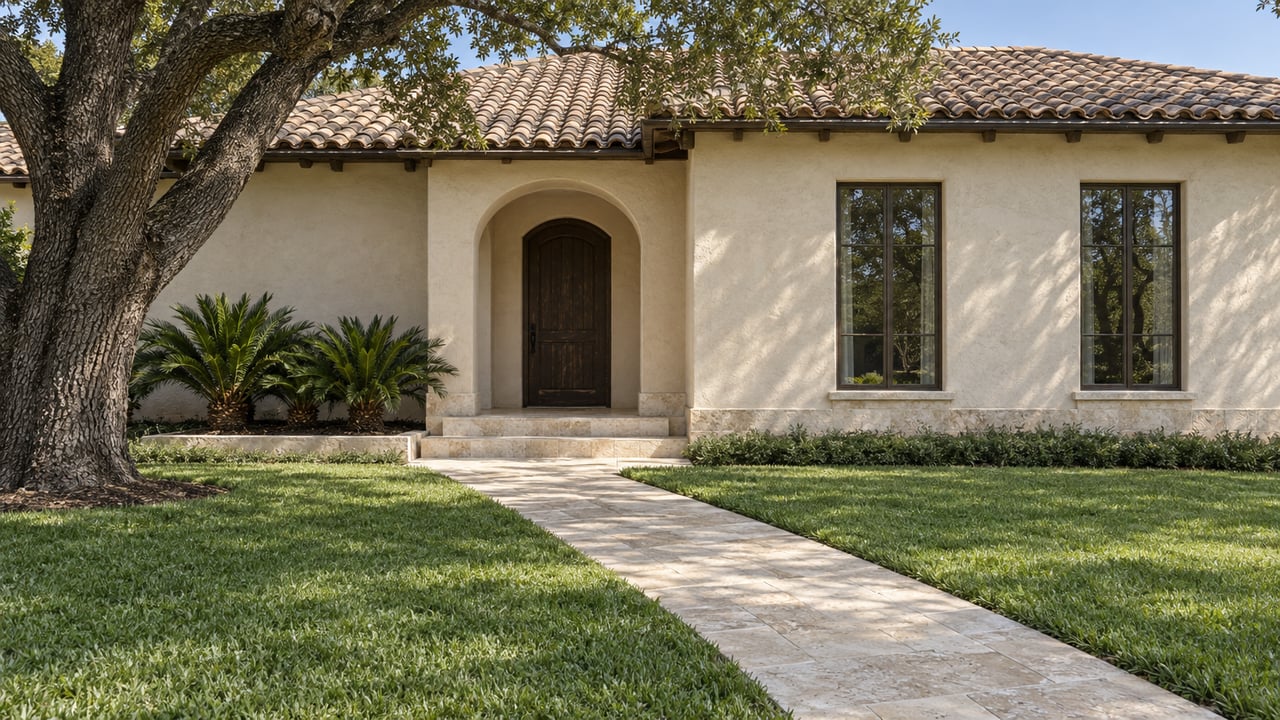
The owner of 314 Cadima Avenue wanted one more bedroom. He told the Coral Gables Historic Preservation Board on September 17, 2026 that he didn't want to change much about the house, because he knew it was historic.
The cottage dates to 1925. H. George Fink designed it, and the Atlanta team of Lindsey Hopkins and Herbert Nichols built it as one of the moderately priced homes George Merrick commissioned south of the San Sebastian. Until this year it was simply an old house. The case reached the board because of a historic significance determination that the owner had filed himself. A city letter dated July 23, 2026 found the property met the minimum criteria for landmark designation and set a hearing date. On September 17 the board voted 7-0 to designate it.
That sequence explains the market for older single-family homes in Coral Gables better than any price chart. On a 1920s or 1930s house, the plans to expand are often the thing that brings the house to the preservation office. Once it is there, the renovation runs on the preservation calendar.
The fast lane that leaves these houses out
The city has spent the fall promoting its Same Day Permit Program. The pilot gives qualifying residential applications expedited review at no extra cost. Applications with initial fees paid before 8 a.m. get same-day review, and later ones are reviewed by the end of the next business day. Eligible single-family work includes roofing, doors and windows, exterior painting, asphalt driveways and some kitchen and bathroom renovations. The Miami Herald reported that the City Commission backed the pilot unanimously in July, that rollout began in August, and that Commissioner Richard Lara said everyday home repairs should be provided "without delay."
The city's own announcement also lists what is excluded. Work involving historic properties or properties within historic districts is ineligible, along with projects that need structural or mechanical review and kitchen or bath work that involves HVAC or vented range hoods. A Board of Architects reviewer can also remove any application that can't be approved administratively.
Even inside the lane, speed doesn't guarantee approval. In its first month the program processed 158 qualifying applications. Of those, 65 were approved and 52 permits were issued. Acting Development Services Director Doug Ramirez described the goal as making routine permitting "as straightforward and efficient as possible."
The result is two tracks. A newer house getting a new roof moves through in a day. A Mediterranean Revival house with a porte cochere and barrel-tile parapets is excluded the moment it is designated. If it isn't designated yet, a plan that involves demolition sends it to a different office.
Where the demolition permit leads
The rule sits in Section 8-107(G) of the zoning code, as amended by Ordinance 2023-03:
"All demolition permits for non-designated buildings and/or structures must be approved by the Historic Preservation Officer or designee."
From there, the steps follow a fixed order:
- The determination. The city's application describes the historic significance determination as a review of a non-designated structure "prior to a request for a demolition permit." The application asks for a current survey, a letter of intent, labeled color photographs and the fee. The city fee schedule published September 15, 2026 lists the fee at $761.25.
- The eligibility clock. The Historic Preservation Officer has 45 days from submittal to decide eligibility. The ordinance calls that finding "preliminary in nature."
- The hearing. If the house is found eligible, the designation hearing must be held as soon as practical and within 90 days. The owner and the officer can agree to defer it. The city may also require an independent consultant's analysis, such as an appraisal or a historic assessment, at the applicant's expense.
- The clearance and the appeal window. If the house doesn't meet the criteria, the demolition approval is valid for 18 months. Any citizen may appeal it within 10 days of its online posting, and a completed designation report is due within 21 days of the notice of intent to appeal.
The appeal step is used. In December 2025 the Coral Gables Gazette reported that the board voted 5-3 against a resident's appeal seeking to designate the University of Miami's 1954 Eaton Residential College. That vote cleared the way for demolition and new student housing. The university had gotten a staff finding that the building didn't meet minimum eligibility, and that finding was then appealed. A single-family house cleared at staff level gets the same 10-day window.
The timing matters for a transaction. The eligibility window plus the outer limit for a hearing comes to as many as 135 days. MIAMI REALTORS put the median time from listing to closing for Miami-Dade single-family homes at 80 days in August 2026. That figure is countywide, not specific to Coral Gables. A preservation review that starts after the contract is signed can still be open long after the keys change hands.
After designation, the design is decided in hearings
Designation doesn't stop a project. It sends the project to a different set of reviewers, and the September 17 agenda shows what that looks like.
The city's application for a Certificate of Appropriateness requires a Board of Architects recommendation before it can be filed. Minor work goes through a Standard Certificate, which staff must approve or deny within 30 days of a complete application. Additions, alterations, demolition and similar work go through a Special Certificate, which is decided at a public board hearing with a 60-day action window. The fee schedule lists no charge for processing either kind. The cost is time and design control, not money.
410 Minorca Avenue is a 1935 landmark that staff described as one of the earliest homes in the Mediterranean transitional style, with very few alterations. The owner proposed a rear second-story addition and a one-story east addition. The application was deferred in July after motions failed. The architect then replaced a roof that sprawled from the old house into the new one with a flat-roofed connector, changed an archway that echoed the main entry too closely, and removed decorative vents. On September 17 the board approved it unanimously, with nine conditions. The ninth was added from the dais and asked the architect to study window openings flanking the master bedroom.
1203 Alhambra Circle was permit number 23 in the city. Walter DeGarmo designed it in 1922, and it is a contributing home in the Alhambra Circle Historic District, which was designated in 2008. The project included a 189-square-foot addition, a garage converted to a guest bedroom, and a gazebo with an outdoor kitchen. Most of the work was interior. The Board of Architects approved the design in March, and the Preservation Board approved it on September 17 with 13 conditions.
314 Cadima Avenue is now in the same process. At the hearing, staff said the owner's plan would go to the Board of Architects within weeks and then return for its Certificate of Appropriateness.
All three projects were approved. Each was approved on terms the board helped write.
What designation offers in return
Designation also brings an incentive that is easy to misunderstand. Article 8 provides a 10-year ad valorem exemption for individually listed properties and contributing resources. It applies to the assessed value of qualifying improvements, not to the land and not to all taxes. According to the city's application, it covers only the increase attributable to the improvements and only from taxing authorities that participate. Part I has to be filed before construction, with proof of designation, an approved Certificate, plans, photos of the house before work starts, and a $500 processing fee. The owner also signs a covenant to maintain the qualifying work, and the Property Appraiser calculates the exemption. The code also allows preservation-related zoning variances for designated properties, granted only together with a Special Certificate.
Because Part I comes before construction, the incentive is tied to the same review sequence. A buyer who starts work before filing gives up the exemption for that work.
Checking a house before the contract
The Historical Resources department page links to an interactive map of historic districts and properties, a register of locally designated properties, and posted significance-determination letters. The register currently runs through July 16, 2026 and lists addresses with district notes. Taken together, those three documents tell a buyer which track a given house is on:
- Listed in the register or inside a mapped district: excluded from same-day permits, and exterior work goes through a Certificate.
- A posted determination letter for the address: the eligibility question has already been asked, and the letter records the answer.
- Old and not listed: the open case, where a plan that involves demolition sends the house to the preservation officer.
Two areas warrant closer reading. A city-commissioned draft survey of North Ponce and the Flagler Section, prepared by Plusurbia Design, inventories 556 historic resources. It describes the Flagler Section as predominantly single-family since the 1940s, according to the Gazette's August 17 report. The report says its purpose is to identify possible districts and significant properties before they come up one by one through demolition requests. Eligibility would still be decided property by property. At the September 17 meeting, staff told the board it was "just the survey at this point, it's not a designation report," and that any action depends on later direction from the board and the city manager.
Questions buyers raise
Can a buyer request a determination before closing?
The city's materials don't say. The application identifies the owner and the applicant separately, but none of the city documents reviewed addresses a prospective purchaser filing before taking title. The Historical Resources office can answer that.
Does every old house get reviewed?
No. The determination is tied to demolition approval for non-designated structures. The city's guide describes a general 50-year threshold, while Article 8 says properties that became significant within the past 50 years are ordinarily ineligible, with listed exceptions.
Do interior renovations need a Certificate?
According to the city's preservation guide, interior remodels normally aren't reviewed unless the owner is seeking tax relief or the interior has a special public designation. The exemption application, for its part, requires an approved Certificate before work begins.
If the house you're considering was built under Merrick's plan and your plans for it go beyond a new roof, the order of approvals belongs in the offer timeline. Luxury by Monica can review a property's register status, any posted determination letters, and the steps your intended renovation would require before you commit. Schedule a Private Consultation.
This article is general information, not legal, tax or financial advice. Consult a qualified professional about your situation.